
Addressing Critical SWIFT CSP Independent Assessment Concerns
Navigating the requirements of the SWIFT Customer Security Programme (CSP) is crucial for financial institutions worldwide. A key component of this is the mandatory independent assessment. However, many organisations face SWIFT CSP Independent Assessment Concerns that can complicate compliance efforts. Understanding these challenges is the first step towards a smoother, more effective assessment process.
This article dives into the common hurdles organizations encounter during their SWIFT CSP independent assessments and offers insights on how to proactively address them.
Understanding the SWIFT CSP Independent Assessment
Before tackling the concerns, let’s briefly recap. The SWIFT CSP framework establishes mandatory security controls designed to protect the integrity and confidentiality of the SWIFT network and its users. To ensure compliance, SWIFT mandates that users perform an annual self-attestation against these controls. Critically, most users must also undergo an independent assessment performed by a qualified external party to validate this attestation.
This assessment verifies whether the implemented controls effectively meet the requirements outlined in the latest version of the SWIFT Customer Security Controls Framework (CSCF). While essential for security, the process itself presents several potential difficulties.
Key SWIFT CSP Independent Assessment Concerns Unpacked
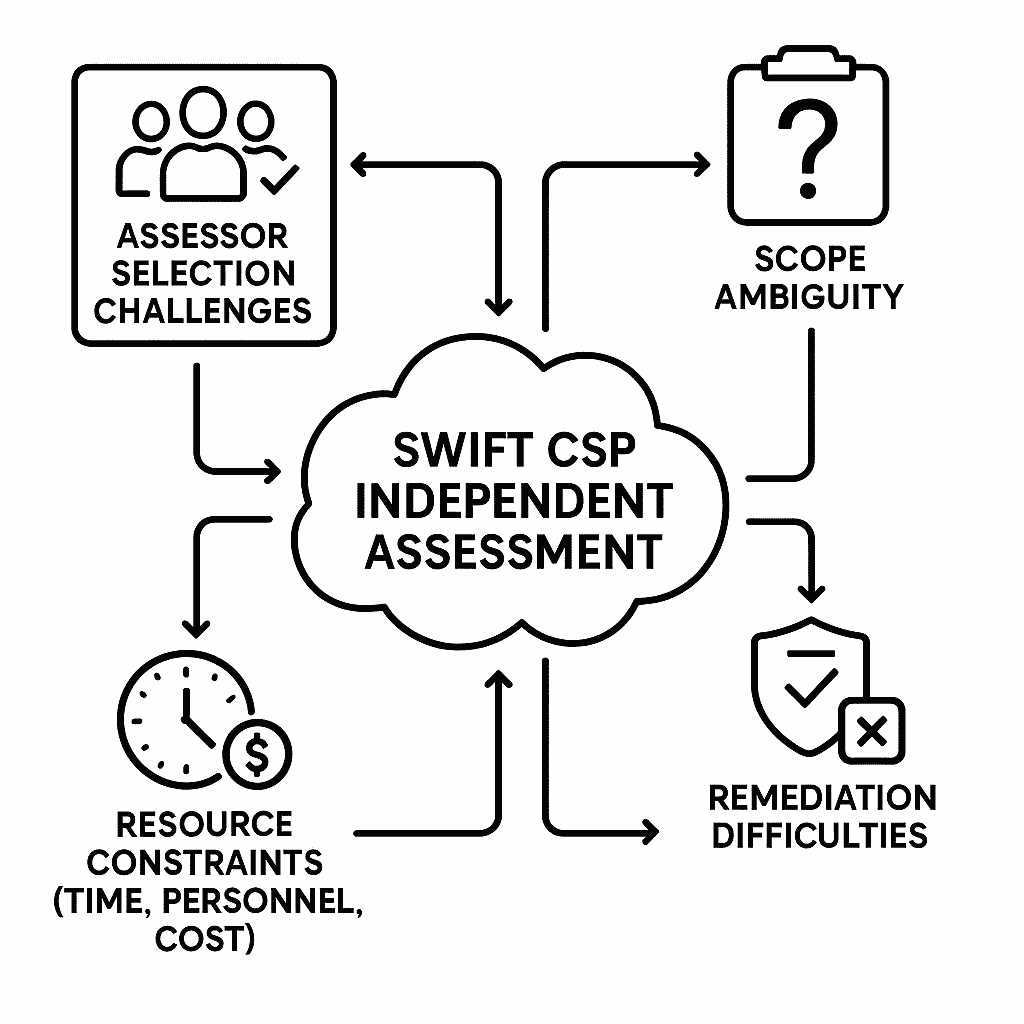
Organisations often grapple with specific issues during the assessment lifecycle. Let’s explore some of the most prevalent SWIFT CSP Independent Assessment Concerns:
1. Choosing the Right Independent Assessor
Selecting a qualified and truly independent assessor is paramount, yet challenging. Concerns include:
- Qualification Verification: Ensuring the assessor possesses deep knowledge of both SWIFT architecture and cybersecurity auditing standards.
- True Independence: Avoiding conflicts of interest, especially if the assessor firm also provides other services to the institution.
- Experience Mismatch: Partnering with assessors who lack specific experience in assessing financial institutions of similar size or complexity.
2. Scope Ambiguity and Depth of Assessment
Interpreting SWIFT controls isn’t always black and white. This can lead to:
- Inconsistent Interpretations: Differences between how the institution and the assessor interpret control objectives and evidence requirements.
- Varying Assessment Depth: Some assessors may perform superficial checks, while others delve extremely deep, leading to unpredictable effort levels.
- Scope Creep: The assessment expanding beyond the initially agreed-upon scope, increasing time and cost.
3. Resource Drain: Time, Personnel, and Cost
Independent assessments are resource-intensive. Key concerns involve:
- Significant Time Commitment: Internal teams (IT, security, compliance) must dedicate substantial time to prepare documentation, answer queries, and facilitate the assessment.
- Financial Costs: The direct fees for qualified assessors can be substantial, especially for complex environments.
- Operational Disruption: The assessment process can potentially disrupt day-to-day operations if not managed effectively.
4. Addressing Remediation Challenges Post-Assessment
An assessment often identifies gaps that require remediation. Concerns here include:
- Prioritisation: Determining which findings pose the highest risk and need immediate attention.
- Resource Allocation for Fixes: Securing the budget and personnel required to implement corrective actions.
- Timeliness: Completing remediation efforts within required timeframes to maintain compliance.
5. Keeping Pace with Evolving Threats and CSP Updates
The cyber threat landscape and the SWIFT CSP framework itself are constantly evolving.
- Assessment as a Snapshot: An assessment only validates compliance at a specific point in time. Maintaining security is an ongoing effort.
- Adapting to CSCF Changes: SWIFT regularly updates the CSCF. Organisations must continuously adapt their controls and prepare for assessments against new requirements.
Best Practices for a Smoother Assessment
While SWIFT CSP Independent Assessment Concerns are valid, proactive measures can mitigate them:
- Start Early: Begin preparation well in advance of your attestation deadline.
- Thoroughly Vet Assessors: Conduct due diligence, check references, and clarify scope and methodology upfront.
- Maintain Clear Documentation: Keep detailed records of your controls, implementation evidence, and policies.
- Foster Internal Collaboration: Ensure IT, security, and compliance teams work together seamlessly.
- View as an Opportunity: Treat the assessment not just as a compliance hurdle, but as a chance to genuinely improve your security posture.
vCISO services resolving SWIFT CSP Independent Assessment Concerns.
Conclusion
The SWIFT CSP Independent Assessment is a critical element in securing the global financial ecosystem. While concerns regarding assessor selection, scope, resources, and remediation are common, they are not insurmountable. By understanding these potential SWIFT CSP Independent Assessment Concerns and adopting a proactive, well-prepared approach, financial institutions can navigate the process more effectively, ensuring compliance and strengthening their defences against evolving cyber threats.